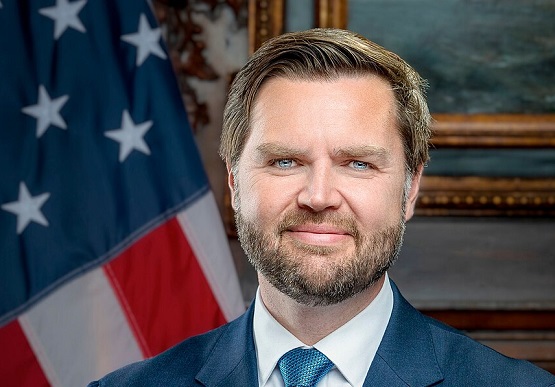
In the month of February, the Vice President of the United States—the second in command of the most powerful nation on earth—will visit Armenia in his official capacity. Whether one admires or criticizes American politics, whether one aligns with the Democratic or Republican parties, anyone familiar with this public servant’s life story cannot help but feel respect and admiration.
In our country, where poverty continues to touch too many lives and where, at times, the future can feel uncertain or even closed off, such a visit carries meaning far beyond diplomacy. For this reason, the Vice President’s visit should be seen not only as an official event, but as a powerful source of inspiration—a reminder that circumstances do not define destiny. He stands as a role model for every child and young person, regardless of race, background, or origin.
This letter, therefore, is addressed to you—my Orran children, and all the children of Armenia. Many of you, like him, are facing immense challenges today: children from Artsakh who have lost your homes, and children from Yerevan and other regions who face various hardships and uncertainty within your own families.
The Vice President of the United States will soon walk on Armenian soil. His life story is one of perseverance, resilience, and an unshakable belief that dreams are worth pursuing—even when the odds are stacked against you.
Born into a poor “hillbilly” family, he endured a childhood marked by hardship and instability. His mother struggled with drug addiction, became a parent while still in high school, and eventually lost her job as a nurse due to her illness. His father was largely absent from his life.
His grandmother—lovingly known as Mamaw—was elderly and poor, yet strong beyond measure. Hunger, uncertainty, and constant movement from one home to another were part of his daily reality.
In his autobiography and the film Hillbilly Elegy based on it, we see a chubby teenage boy bullied at school, physically abused by his mother, and often left to fend for himself. Yet nowhere do we see hopelessness or bitterness take hold of his spirit. Like many struggling teenagers, he made mistakes. He once stole a calculator because he was failing algebra and his grandmother could not afford to buy one. When he was caught, Mamaw chose compassion over punishment and bought him the calculator instead. On another occasion, he and his friends took his grandmother’s car and crashed it. He even vandalized a small store with his friends because his friend was upset with the clerk.
But these moments did not define his future.
What defined him was resilience. What shaped him was love—imperfect but unconditional—from his sister, his grandmother, and later from Usha, his wife, whom he met while both were law students. With their support, and through sheer determination, he rose from poverty to attend one of the best universities in America, built a successful career as a lawyer, and ultimately became Vice President of the United States.
Soon, the Vance family will welcome their fourth child. We extend our warmest wishes to them for health, joy, and happiness.
Dear children of Armenia, dear children of Orran: let this story remind you that your beginnings do not limit your endings. Hardship is not a verdict. Poverty is not a life sentence. With perseverance, education, and love, even the most difficult paths can lead to extraordinary places.
May this visit remind us all—especially our children—that hope is real, dreams are valid, and the future is still being written.
Founder of Orran